-
Split, Rab and Undiscovered Islands of the North Yacht Cruise - MS Il Mare
MS Il Mare, Riviera Travel
BOOK WITH CONFIDENCE
Family run business established in 1983. ABTA & ATOL Protected.
COMPETITIVELY PRICED
We work closely with our travel partners to secure the best holiday price available.
KNOWLEDGE & SERVICE
Our extensively travelled team are here to ensure you receive the very best advice and first-class service.
MS Il Mare
Departure: 07/06/2026
Duration: 8 Days
Roundtrip from Split
Itinerary
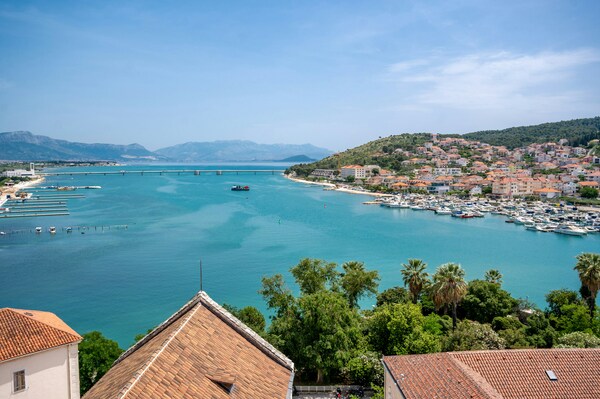
Discover the historic capital of Split, as well as the amazing Kornati archipelago, Zadar's sea organ and sun salutation, medieval Trogir and the natural harbour of Telašćica.Explore the largest city on the Croatian coast and the beautiful islands that s
-
Day 1 Split, Croatia 07 Jun 2026 (Sunday)
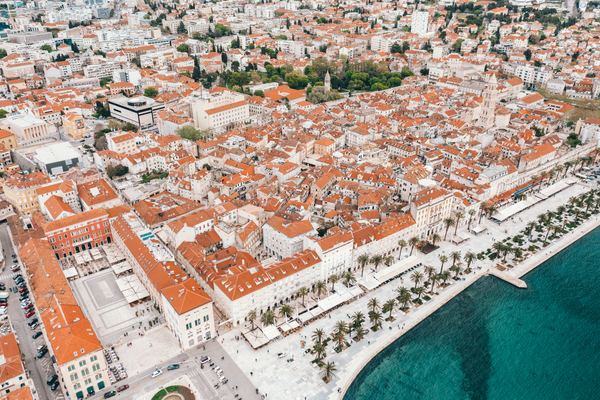
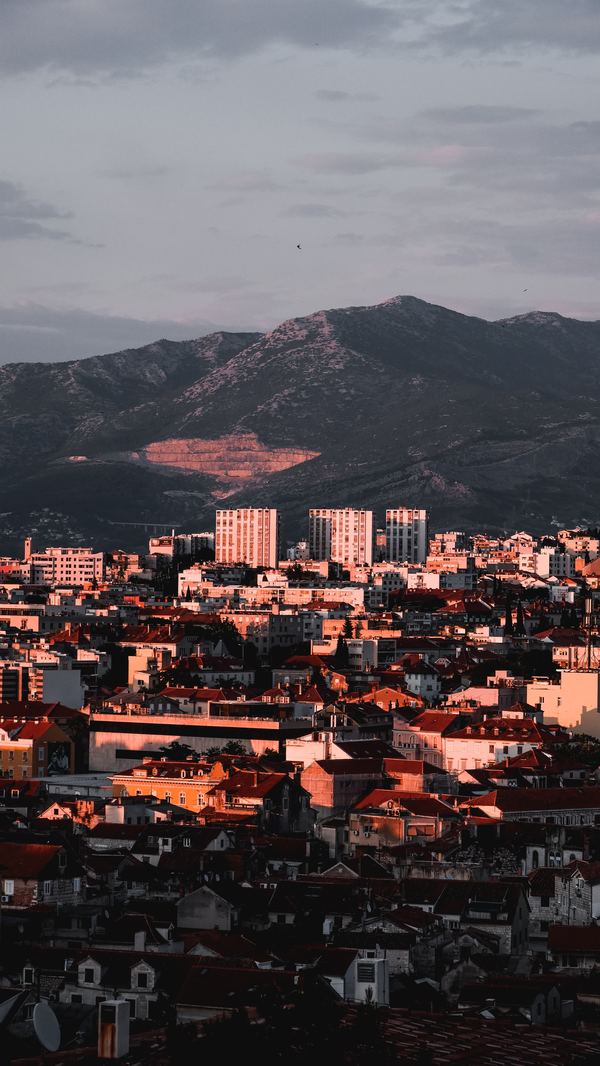
Split's ancient core is so spectacular and unusual that a visit is more than worth your time. The heart of the city lies within the walls of Roman emperor Diocletian's retirement palace, which was built in the 3rd century AD. Diocletian, born in the nearby Roman settlement of Salona in AD 245, achieved a brilliant career as a soldier and became emperor at the age of 40. In 295 he ordered this vast palace to be built in his native Dalmatia, and when it was completed he stepped down from the throne and retired to his beloved homeland. Upon his death, he was laid to rest in an octagonal mausoleum... See more
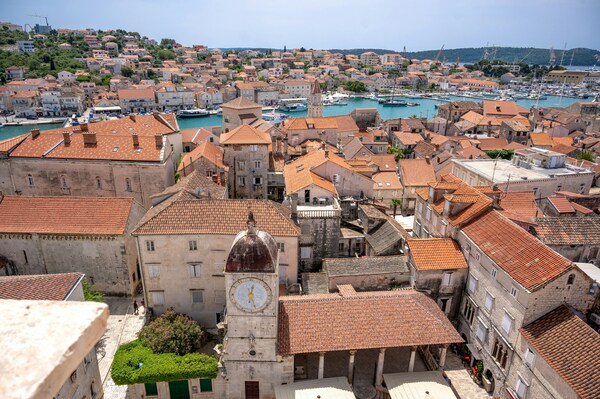
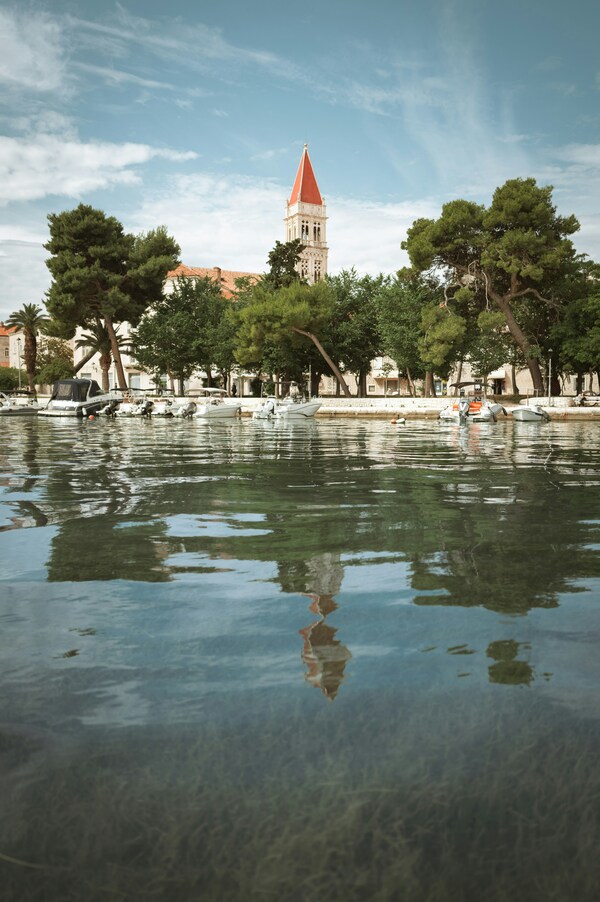
- Day 2 Trogir, Croatia 08 Jun 2026 (Monday)
-
Day 3 Zadar, Croatia 09 Jun 2026 (Tuesday)
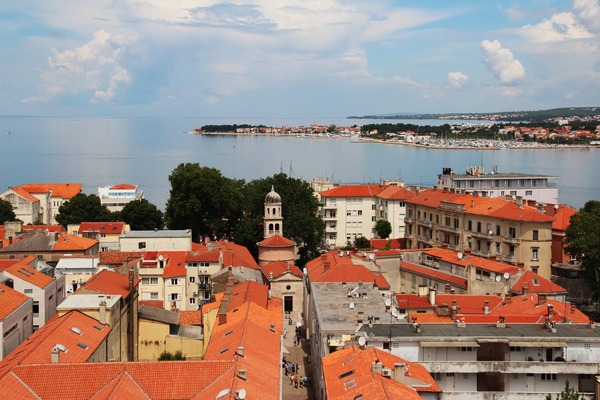
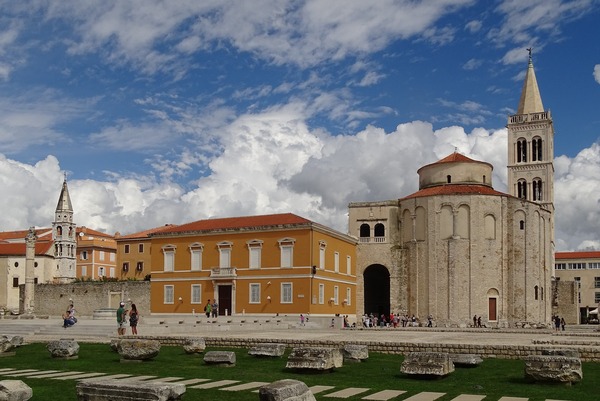
Dalmatia's capital for more than 1,000 years, Zadar is all too often passed over by travelers on their way to Split or Dubrovnik. What they miss out on is a city of more than 73,000 that is remarkably lovely and lively despite—and, in some measure, because of—its tumultuous history. The Old Town, separated from the rest of the city on a peninsula some 4 km (2½ miles) long and just 1,640 feet wide, is bustling and beautiful: the marble pedestrian streets are replete with Roman ruins, medieval churches, palaces, museums, archives, and libraries. Parts of the new town are comparatively dreary, a... See moreDalmatia's capital for more than 1,000 years, Zadar is all too often passed over by travelers on their way to Split or Dubrovnik. What they miss out on is a city of more than 73,000 that is remarkably lovely and lively despite—and, in some measure, because of—its tumultuous history. The Old Town, separated from the rest of the city on a peninsula some 4 km (2½ miles) long and just 1,640 feet wide, is bustling and beautiful: the marble pedestrian streets are replete with Roman ruins, medieval churches, palaces, museums, archives, and libraries. Parts of the new town are comparatively dreary, a testament to what a world war followed by decades of communism, not to mention a civil war, can do to the architecture of a city that is 3,000 years old. A settlement had already existed on the site of the present-day city for some 2,000 years when Rome finally conquered Zadar in the 1st century BC; the foundations of the forum can be seen today. Before the Romans came the Liburnians had made it a key center for trade with the Greeks and Romans for 800 years. In the 3rd century BC the Romans began to seriously pester the Liburnians, but required two centuries to bring the area under their control. During the Byzantine era, Zadar became the capital of Dalmatia, and this period saw the construction of its most famous church, the 9th-century St. Donat's Basilica. It remained the region's foremost city through the ensuing centuries. The city then experienced successive onslaughts and occupations—both long and short—by the Osogoths, the Croatian-Hungarian kings, the Venetians, the Turks, the Habsburgs, the French, the Habsburgs again, and finally the Italians before becoming part of Yugoslavia and, in 1991, the independent republic of Croatia. Zadar was for centuries an Italian-speaking city, and Italian is still spoken widely, especially by older people. Indeed, it was ceded to Italy in 1921 under the Treaty of Rapallo (and reverted to its Italian name of Zara). Its occupation by the Germans from 1943 led to intense bombing by the Allies during World War II, which left most of the city in ruins. Zadar became part of Tito's Yugoslavia in 1947, prompting many Italian residents to leave. Zadar's most recent ravages occurred during a three-month siege by Serb forces and months more of bombardment during the Croatian-Serbian war between 1991 and 1995. But you'd be hard-pressed to find outward signs of this today in what is a city to behold. There are helpful interpretive signs in English all around the Old Town, so you certainly won't feel lost when trying to make sense of the wide variety of architectural sites you might otherwise pass by with only a cursory look.
See less - Day 4 Rab Island, Croatia 10 Jun 2026 (Wednesday)

- Day 5 Telašcica Nature Park, Croatia 11 Jun 2026 (Thursday)
-
Day 6 Sibenik, Croatia 12 Jun 2026 (Friday)
Šibenik's main monument, its Gothic-Renaissance cathedral, built of pale-gray Dalmatian stone and designated a UNESCO World Heritage Site, stands on a raised piazza close to the seafront promenade. From here a network of narrow, cobbled streets leads through the medieval quarter of tightly packed, terra-cotta–roof houses, and up to the ruins of a 16th-century hilltop fortress. The city has never been a real tourist destination. Before the Croatian war for independence, it was a relatively prosperous industrial center, but when the factories closed, Šibenik sank into an economic depression. How... See moreŠibenik's main monument, its Gothic-Renaissance cathedral, built of pale-gray Dalmatian stone and designated a UNESCO World Heritage Site, stands on a raised piazza close to the seafront promenade. From here a network of narrow, cobbled streets leads through the medieval quarter of tightly packed, terra-cotta–roof houses, and up to the ruins of a 16th-century hilltop fortress. The city has never been a real tourist destination. Before the Croatian war for independence, it was a relatively prosperous industrial center, but when the factories closed, Šibenik sank into an economic depression. However, the cathedral more than warrants a look, and it makes a decent base for visiting the waterfalls of Krka National Park.
See less -
Day 7 Split, Croatia 13 Jun 2026 (Saturday)
Split's ancient core is so spectacular and unusual that a visit is more than worth your time. The heart of the city lies within the walls of Roman emperor Diocletian's retirement palace, which was built in the 3rd century AD. Diocletian, born in the nearby Roman settlement of Salona in AD 245, achieved a brilliant career as a soldier and became emperor at the age of 40. In 295 he ordered this vast palace to be built in his native Dalmatia, and when it was completed he stepped down from the throne and retired to his beloved homeland. Upon his death, he was laid to rest in an octagonal mausoleum... See moreSplit's ancient core is so spectacular and unusual that a visit is more than worth your time. The heart of the city lies within the walls of Roman emperor Diocletian's retirement palace, which was built in the 3rd century AD. Diocletian, born in the nearby Roman settlement of Salona in AD 245, achieved a brilliant career as a soldier and became emperor at the age of 40. In 295 he ordered this vast palace to be built in his native Dalmatia, and when it was completed he stepped down from the throne and retired to his beloved homeland. Upon his death, he was laid to rest in an octagonal mausoleum, around which Split's magnificent cathedral was built.In 615, when Salona was sacked by barbarian tribes, those fortunate enough to escape found refuge within the stout palace walls and divided up the vast imperial apartments into more modest living quarters. Thus, the palace developed into an urban center, and by the 11th century the settlement had expanded beyond the ancient walls.Under the rule of Venice (1420–1797), Split—as a gateway to the Balkan interior—became one of the Adriatic's main trading ports, and the city's splendid Renaissance palaces bear witness to the affluence of those times. When the Habsburgs took control during the 19th century, an overland connection to Central Europe was established by the construction of the Split–Zagreb–Vienna railway line.After World War II, the Tito years saw a period of rapid urban expansion: industrialization accelerated and the suburbs extended to accommodate high-rise apartment blocks. Today the historic center of Split is included on UNESCO's list of World Heritage Sites.
See less -
Day 8 Split, Croatia 14 Jun 2026 (Sunday)
Split's ancient core is so spectacular and unusual that a visit is more than worth your time. The heart of the city lies within the walls of Roman emperor Diocletian's retirement palace, which was built in the 3rd century AD. Diocletian, born in the nearby Roman settlement of Salona in AD 245, achieved a brilliant career as a soldier and became emperor at the age of 40. In 295 he ordered this vast palace to be built in his native Dalmatia, and when it was completed he stepped down from the throne and retired to his beloved homeland. Upon his death, he was laid to rest in an octagonal mausoleum... See moreSplit's ancient core is so spectacular and unusual that a visit is more than worth your time. The heart of the city lies within the walls of Roman emperor Diocletian's retirement palace, which was built in the 3rd century AD. Diocletian, born in the nearby Roman settlement of Salona in AD 245, achieved a brilliant career as a soldier and became emperor at the age of 40. In 295 he ordered this vast palace to be built in his native Dalmatia, and when it was completed he stepped down from the throne and retired to his beloved homeland. Upon his death, he was laid to rest in an octagonal mausoleum, around which Split's magnificent cathedral was built.In 615, when Salona was sacked by barbarian tribes, those fortunate enough to escape found refuge within the stout palace walls and divided up the vast imperial apartments into more modest living quarters. Thus, the palace developed into an urban center, and by the 11th century the settlement had expanded beyond the ancient walls.Under the rule of Venice (1420–1797), Split—as a gateway to the Balkan interior—became one of the Adriatic's main trading ports, and the city's splendid Renaissance palaces bear witness to the affluence of those times. When the Habsburgs took control during the 19th century, an overland connection to Central Europe was established by the construction of the Split–Zagreb–Vienna railway line.After World War II, the Tito years saw a period of rapid urban expansion: industrialization accelerated and the suburbs extended to accommodate high-rise apartment blocks. Today the historic center of Split is included on UNESCO's list of World Heritage Sites.
See less
What's Included:
- Direct flights from a choice of UK airports with no regional supplements and transfers
- Itinerary curated by Riviera experts. Insightful excursions & visits with local guides
- Expert Riviera Cruise Director & Concierge looking after you throughout
- Evening entertainment from quizzes to performers
- Onboard spa & wellness facilities
- Delicious full board dining, plus Chef's Dinner
- Free Wi-Fi
- 20kg+ luggage allowance
Suites
-
Category B Cabins
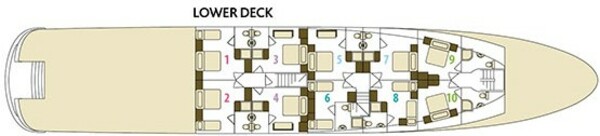
Lower Deck Double 172-204 sq. ft
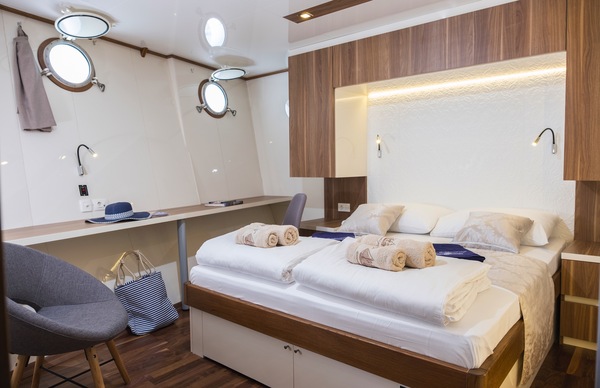
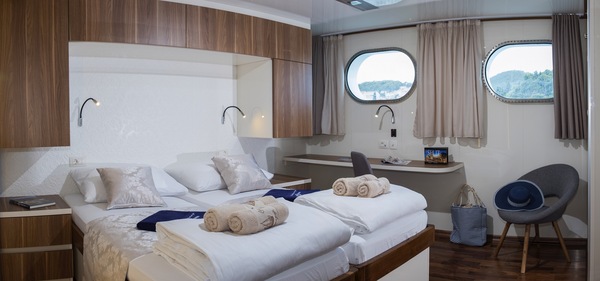
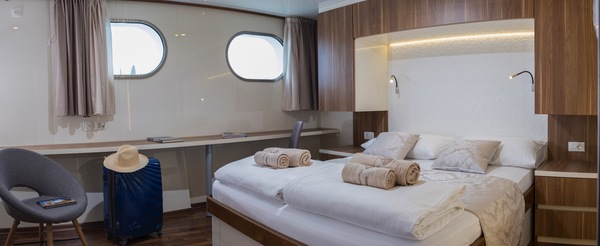
Category B Cabins are located on the lower deck, with double bed, measure approximately 16-18 square metres (172-193 square feet) and have two attractive porthole windows. There are also two cabins with a double bed and an additional single bed available – each with approximately 19 square metres (204 square feet) of living space.
Lower Deck Twin 194 sq. ft
Category B Cabins are located on the lower deck, with twin beds, measure approximately 18 square metres (194 square feet) and have two attractive porthole windows.
Features
- Individual climate control
- Porthole windows
- Fixed twin beds
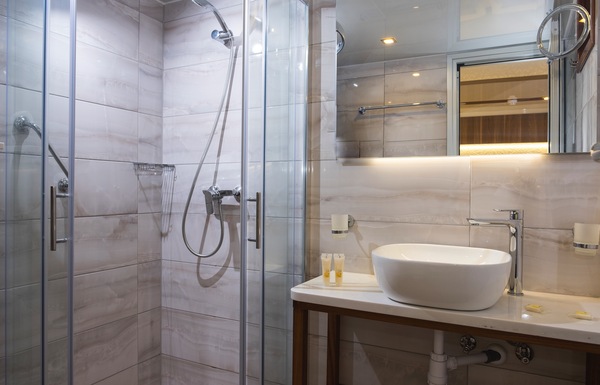
- Ensuite bathroom with walk-in shower
- Shampoo, conditioner, shower gel, body lotion, soap
- Towels, beach towels and hairdryer
- EU plug sockets
- Desk & chair
- Safe
Category B Cabins
-
Category A Cabins
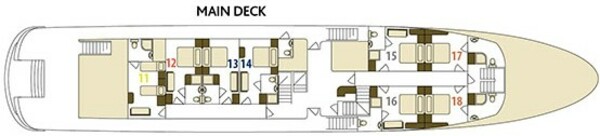
Main Deck Double 172 sq. ft
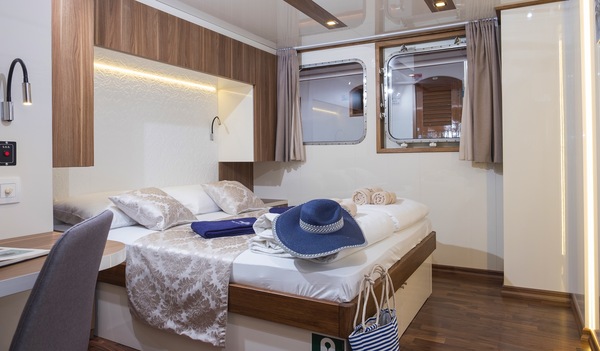
These cabins measure approximately 16 square metres (172 square feet) and are located on the main deck with double or twin beds pushed together and two windows (one of which opens).
Main Deck Twin 172 sq. ft
These cabins measure approximately 16 square metres (172 square feet) and are located on the main deck twin beds and two windows (one of which opens).
Features
- Individual climate control
- Twin beds on the Main Deck Twin or double bed or twin beds pushed together as double on the Main Deck Double
- Ensuite bathroom with walk-in shower
- Shampoo, conditioner, shower gel, body lotion, soap
- Towels, beach towels and hairdryer
- EU plug sockets
- Desk & chair
- Safe
- Two windows, one of which opens
Category A Cabins
Category A Cabins
-
Category A+ Cabins
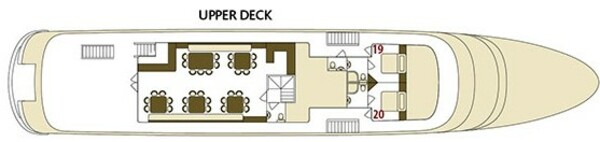
Upper Deck 151 sq. ft
Category A+ Cabins are available on the upper deck with double bed, and measure approximately 14 square metres (151 square feet) with two windows (one of which opens) and a small window in the bathroom.
Main Deck 194 sq. ft
Category A+ Cabins are available on the main deck forward with double bed, measure approximately 18 metres square (194 square feet), and feature two fixed windows.
Main Deck Twin 172 sq. ft
Category A+ Cabins are available on the main deck forward with twin beds, measuring approximately 16 metres square (172 square feet), and feature two fixed windows.
Features
- Individual climate control
- Fixed double bed on Upper Deck or twin beds which can be configured as double on the Main Deck Twin.
- Ensuite bathroom with walk-in shower
- Shampoo, conditioner, shower gel, body lotion, soap
- Towels, beach towels and hairdryer
- EU plug sockets
- Desk & chair
- Safe
- Two windows
Category A+ Cabins
Category A+ Cabins
Restaurants
-
Restaurant
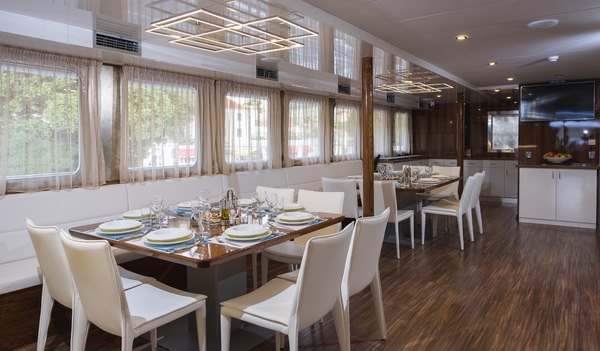
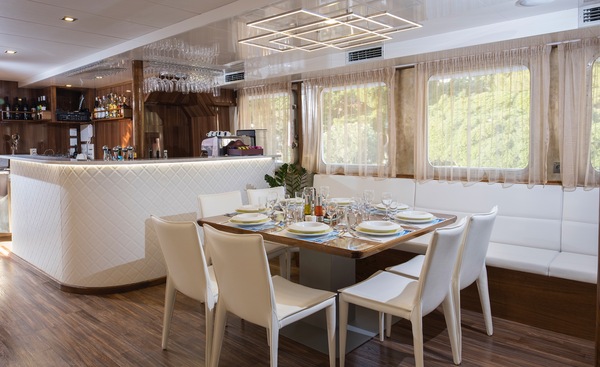
The simple yet elegant restaurant where you can dine in a comfortable and informal atmosphere.
-
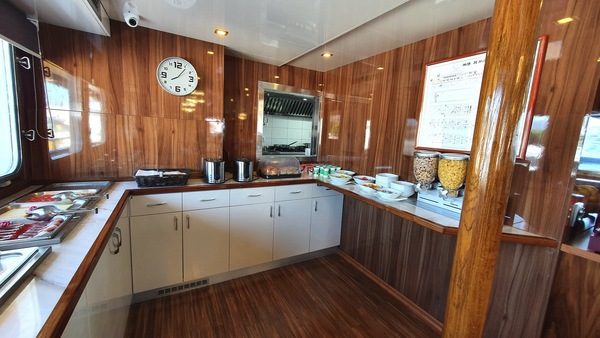
Self-Serve Breakfast Area
More information coming soon.
Deckplans
-
Sun Deck
- Sun Loungers
-
Upper Deck
- Restaurant
- Category A+ Cabins
-
Main Deck
- Category A+ cabins
- Category A cabins
-
Lower Deck
- Category B cabins
Ready to Book?
For more information; please contact our Cruise specialists who will be delighted to help you plan your next holiday.
Call us on 01625 858158 Request Availability & PriceSign up to our Newsletter for exclusive offers and receive up to £250 off your next holiday.
For New Subscribers Only.